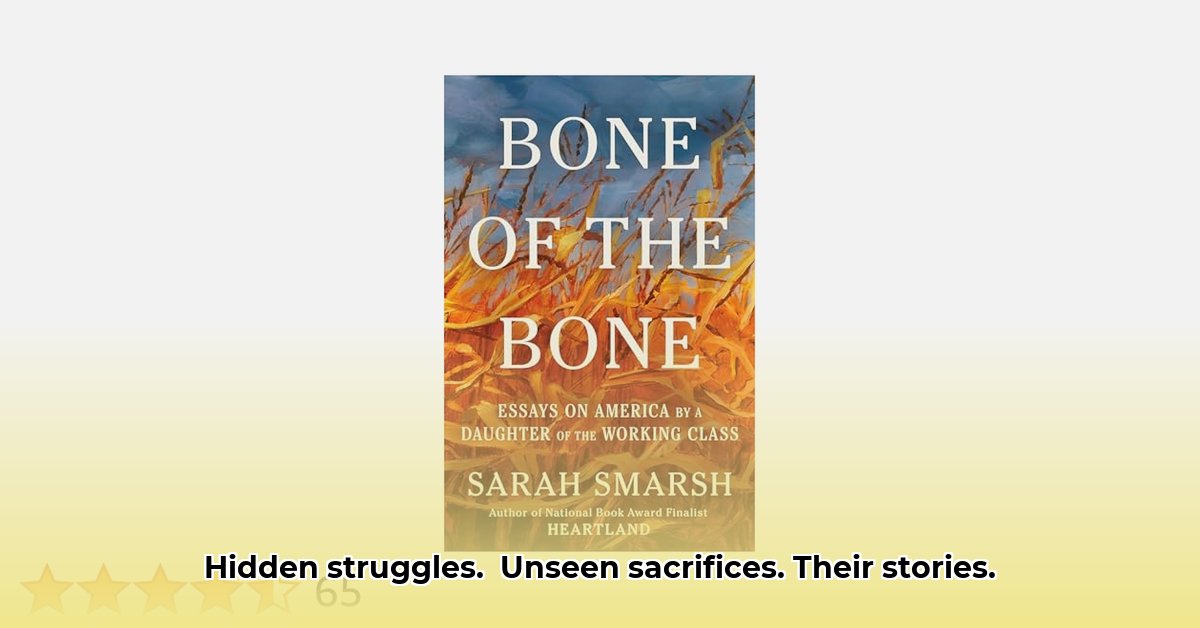
Heartland and Beyond: Two Families, One Shared Struggle
Two poignant memoirs, Heartland by Sarah Smarsh and A Working-Class Family Ages Badly by Juno Roche, offer starkly contrasting yet deeply resonant portraits of working-class life. While Smarsh chronicles the struggles of her family in rural Kansas, Roche depicts the hardships faced by her family in urban London. Despite the geographical and cultural differences, both narratives converge on a shared theme: the crushing weight of persistent poverty and its devastating intergenerational consequences. They effectively challenge simplistic assumptions about poverty, revealing a complex reality far removed from common stereotypes. To understand more about the authors' family backgrounds, click here: family background.
Smarsh's Heartland paints a vivid picture of the relentless struggle for economic stability in rural America. She vividly portrays the anxieties surrounding finances, the precarious access to essential services like healthcare, and the pervasive sense of hopelessness that permeates her community. Her narrative moves beyond mere economic hardship, powerfully conveying the emotional toll of constant stress, fear, and the relentless pressure to persevere despite limited prospects. This isn't just a story of financial scarcity; it's a story of emotional resilience tested to its limits.
In contrast, Roche's A Working-Class Family Ages Badly focuses on the intertwined challenges of urban poverty and intergenerational trauma in London. Their financial struggles are inextricably linked to systemic inequalities, societal prejudices, and personal battles. Family relationships bear the heavy weight of poverty, while addiction and abuse further complicate an already precarious situation. Roche's unflinching honesty creates a raw and unflinching account of survival against overwhelming odds. This story highlights the complexities of navigating poverty within a dense urban environment where resources, though potentially more abundant, are not always accessible or equitably distributed.
Different Perspectives, Universal Truths
While both memoirs share the common theme of economic hardship, their perspectives and approaches diverge significantly. Smarsh's narrative emphasizes the political and cultural misrepresentation of the white working class, directly challenging stereotypes and exposing the dangers of scapegoating the economically vulnerable. Her compelling narrative underscores that economic struggles are not simply a matter of individual failings but are often rooted in broader societal forces beyond personal control.
Roche's memoir, however, introduces an additional layer of complexity by highlighting the intersectional nature of poverty. By focusing on the unique experiences of an LGBTQ+ family navigating poverty, she demonstrates how existing societal biases and inequalities can exacerbate economic hardship for marginalized groups. This powerfully illustrates that the challenges of poverty are not uniform; they are profoundly shaped by intersecting factors such as race, gender, and sexual orientation. This intersectional perspective enriches the conversation beyond the economic aspect, illuminating the social and political dimensions of inequality.
Beyond Personal Stories: A Call for Systemic Change
Heartland and A Working-Class Family Ages Badly are not merely captivating personal narratives; they serve as forceful calls to action. They challenge us to confront uncomfortable truths about systemic inequalities and to actively work towards a more just and equitable society. The authors powerfully argue that significant shifts in both societal attitudes and public policy are necessary to effectively address the complex realities of poverty.
These memoirs offer a sobering reminder of the enormous human cost of persistent inequalities. They expose a pervasive lack of understanding and empathy among those outside these realities—a lack of understanding that perpetuates the cycle of poverty. How can we effectively bridge this gap and catalyze meaningful change?
The following outlines potential collaborative actions, categorized by stakeholder groups:
A Collaborative Framework for Addressing Poverty:
Policy Makers: Invest in research focusing on the lived experiences of poverty across diverse demographics (short-term); develop and implement policies aimed at reducing poverty and promoting social mobility, acknowledging intergenerational trauma and systemic inequalities (long-term).
Researchers & Academics: Conduct large-scale studies tracking the long-term effects of poverty and its intergenerational impact (short-term); create research programs incorporating intersectional perspectives to understand the multifaceted impacts of poverty (long-term).
Non-profit Organizations: Increase funding for and access to mental health services and trauma-informed care (short-term); develop holistic programs combining economic support with comprehensive services to help communities break the cycle of poverty (long-term).
General Public: Engage in critical self-reflection, challenging personal biases and assumptions about poverty (short-term); support policy reforms focused on economic justice, fair resource distribution, and improved social safety nets (long-term).
Heartland and A Working-Class Family Ages Badly are potent testaments to the urgent need for systemic change. They provide a crucial framework for understanding the multifaceted challenges of poverty and inspire a collective commitment towards creating a fairer, more equitable future for all. Their enduring power lies in their ability to humanize the abstract concept of poverty, transforming statistics into compelling narratives that demand our attention and inspire action.